
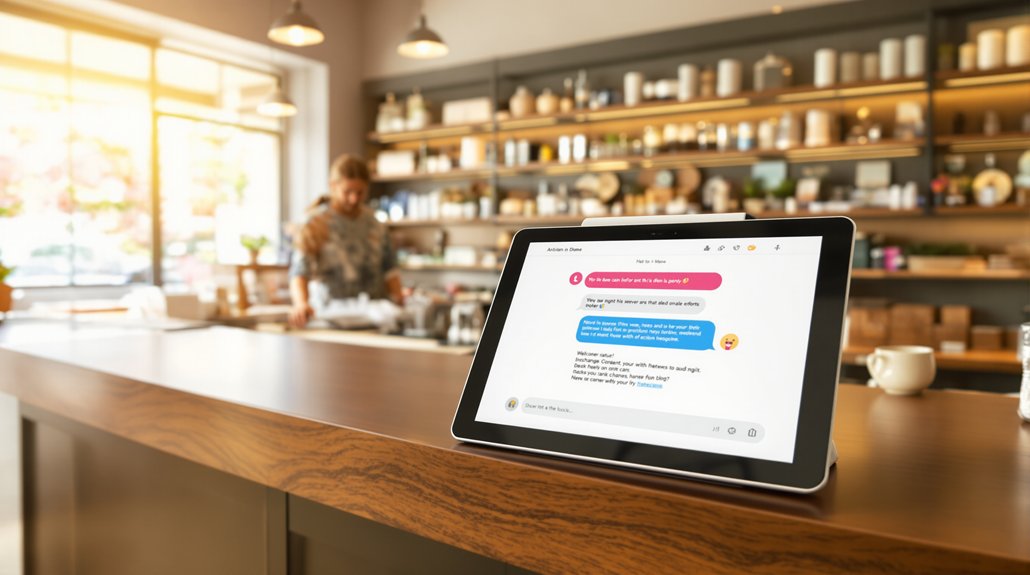
What Can Chatbots Do For Small Retail Stores?
Your retail store's chatbot handles customer questions instantly by pulling product details and pricing from your inventory system, even after closing time. It'll schedule appointments, capture leads through targeted questions, and provide real-time stock availability without tying up your staff. You can start with free platforms like Tidio or invest $20-$500 monthly for advanced features as you grow. The key is knowing when your bot should hand off complex issues to your team—and we'll show you exactly how that works.
Key Points
- Provide 24/7 instant customer support by answering questions about products, prices, and availability in real-time without staff involvement.
- Capture and qualify leads automatically through targeted questions, collecting contact information and identifying serious buyers efficiently.
- Enable customers to book, cancel, or reschedule appointments independently while syncing with calendars and sending automated reminders.
- Deliver real-time inventory updates, alert staff about low stock levels, and maintain consistent information across all sales channels.
- Reduce customer wait times for routine enquiries while seamlessly escalating complex issues to human staff when needed.
What Retail Chatbots Actually Cost to Set Up?
Most small retail stores can expect to spend between $0 and $500 monthly on chatbot solutions, depending on their chosen platform and features.
Small retail stores typically invest $0 to $500 monthly on chatbot solutions, scaling costs based on platform features and business needs.
You'll find free options like Tidio and ManyChat that'll get you started without financial commitment. Mid-tier platforms ($20-$100/month) offer advanced automation and integrations. Premium solutions ($200-$500/month) provide AI-powered responses and unlimited conversations.
Here's what drives costs: conversation volume, AI capabilities, custom integrations, and multilingual support.
You're not locked into expensive enterprise contracts. Start free, test what works, then scale up. You control the investment based on your actual needs and growth.
How Chatbots Answer Customer Questions Instantly?
Your customers won't wait hours for answers, and chatbots eliminate that frustration by responding the moment someone asks a question.
They pull product details, prices, and availability from your inventory system instantly, giving shoppers accurate information without making them search through your website.
This immediate response capability keeps customers engaged while freeing your staff to handle tasks that require a human touch.
24/7 Availability Benefits
Small retail stores lose customers every day because questions go unanswered after business hours. Chatbots break you free from the constraints of traditional store hours by providing 24/7 support.
You'll capture sales while you're sleeping, travelling, or managing other priorities. Your customers won't wait until tomorrow—they'll get instant responses when they're ready to buy. This constant availability eliminates the frustration of missed opportunities and empowers you to compete with larger retailers.
You're no longer chained to your phone or limited by staffing schedules. Your business becomes truly accessible, serving customers on their terms, not yours.
Instant Product Information Access
Round-the-clock availability means nothing if your chatbot can't deliver accurate answers when customers need them.
You need instant access to product specs, pricing, and inventory details without hunting through pages or waiting for staff.
Modern chatbots pull information directly from your database, answering customer questions in seconds.
They'll tell shoppers exactly what's in stock, compare features between products, and provide dimensions or materials instantly.
This immediate access empowers customers to make purchase decisions on their terms, breaking free from traditional retail constraints.
No more information gatekeeping—just straight answers that drive sales.
Reduced Response Time
While traditional customer service operates on human schedules and capacity limits, chatbots eliminate wait times entirely.
You're no longer bound by business hours or staff availability. Your customers receive immediate answers at 3 AM or during holiday rushes.
This instant response capability transforms your operations.
You'll handle multiple enquiries simultaneously without hiring additional staff.
Customers won't abandon their carts due to unanswered questions, and you won't lose sales to competitors who respond faster.
The freedom from response delays means you're always accessible, always helpful, and always ready to convert browsers into buyers.
How Retail Chatbots Work After Your Store Closes?
When your doors lock for the night, retail chatbots shift into a role that's often more valuable than their daytime support.
They're capturing leads while you sleep, answering questions from customers who browse after hours, and scheduling appointments for tomorrow.
You're no longer losing sales to competitors who stay open late. These bots collect contact information, provide product details, and process orders around the clock.
They transform your closed storefront into a 24/7 revenue generator. You've broken free from traditional business hours, expanding your reach without hiring night staff or paying overtime.
How Chatbots Schedule Appointments Without Staff?
Your chatbot syncs with your calendar system and guides customers through booking their own appointments using simple conversation flows.
You're freed from answering scheduling calls while customers book at midnight or during lunch breaks—whenever works for them.
The bot checks real-time availability, offers open slots, and confirms bookings instantly. It sends automatic reminders that reduce no-shows. Customers can reschedule or cancel without bothering you.
You'll reclaim hours previously spent playing phone tag. Your calendar stays organised automatically, and you'll never double-book again.
It's scheduling freedom for everyone involved.
How Retail Chatbots Capture Leads Automatically?
Your chatbot can identify serious buyers by asking targeted questions about their needs, budget, and timeline before they ever speak to your staff.
It automatically collects contact information by offering something valuable in exchange, like a discount code or product recommendation.
This qualification process guarantees you're only following up with visitors who've already shown genuine interest in what you're selling.
Qualifying Visitors With Questions
As soon as a visitor lands on your retail store's website, a chatbot can immediately engage them with strategic questions that separate casual browsers from serious buyers.
You'll discover purchase intent through smart queries about budget, timeline, and specific needs. This automated qualification frees you from manually screening every enquiry, letting you focus energy on high-potential customers ready to buy.
The chatbot captures essential data—contact information, preferences, pain points—while filtering out tyre-kickers. You're building a qualified lead database 24/7 without lifting a finger, transforming anonymous traffic into actionable sales opportunities.
Automated Contact Information Collection
Once the chatbot identifies a qualified prospect, it seamlessly shifts into gathering contact details without feeling pushy or intrusive.
You're free from manually chasing down customer information—the bot handles it naturally within the conversation flow. It'll request email addresses or phone numbers by offering value: exclusive discounts, product updates, or appointment scheduling.
This automation liberates you from tedious data entry while building your contact list effortlessly. The chatbot captures leads 24/7, even when you're closed, ensuring you never miss potential customers.
You'll gain qualified contacts ready for follow-up, breaking free from traditional, time-consuming lead generation methods.
How Chatbots Check Your Stock in Real Time?
Real-time inventory tracking happens when chatbots connect directly to your point-of-sale system and inventory management software. You'll break free from manually checking stock levels or disappointing customers with outdated information. Your chatbot instantly queries your database, delivering accurate availability to shoppers 24/7.
| What Happens | Your Benefit |
|---|---|
| Customer asks about product | Chatbot checks inventory instantly |
| Stock level updates automatically | No manual data entry required |
| Low stock triggers alerts | You reorder before selling out |
| Integration syncs across channels | Consistent information everywhere |
You'll eliminate guesswork and empower customers with immediate, reliable answers.
Best Chatbot Platforms for Small Retail Stores
When you're selecting a chatbot platform, you'll want one that integrates seamlessly with your existing systems without draining your budget or requiring a computer science degree.
ManyChat excels for Facebook Messenger integration, perfect if your customers connect there. Tidio offers affordable live chat combined with automated responses. Chatfuel provides drag-and-drop simplicity for non-technical users.
For e-commerce specifically, consider Shopify Inbox or MobileMonkey. These platforms free you from expensive developers while giving you control over customer conversations.
Choose based on where your customers already spend time, not where you think they should be.
When to Hand Off From Chatbot to Human Staff
Even the smartest chatbot will encounter questions it can't answer, and knowing these limits separates helpful automation from frustrating dead ends.
You'll need clear triggers for human intervention:
| Situation | Chatbot Response | Human Action |
|---|---|---|
| Custom orders | Collect basic details | Finalise specifications |
| Complaints | Acknowledge concern | Resolve issue personally |
| Complex pricing | Provide standard rates | Negotiate special terms |
Set your chatbot to recognise frustration markers—repeated questions, negative language, or explicit requests for help. Don't trap customers in automated loops. Instead, empower them with instant escape routes to your team when automation reaches its limits.